
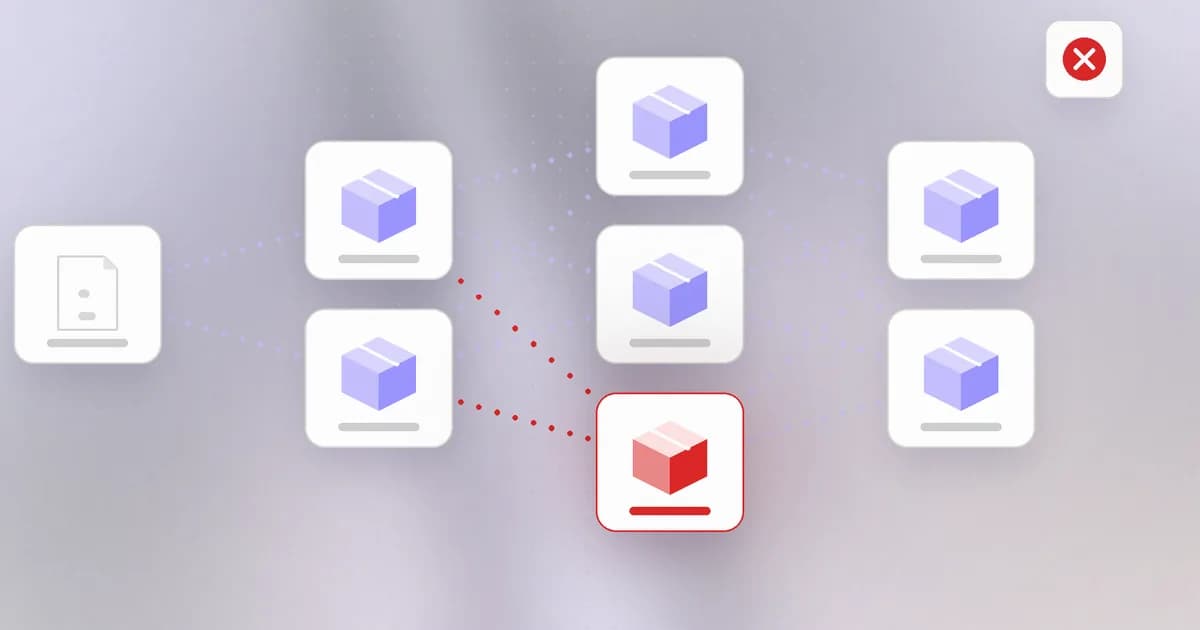
A stolen AI API key is worth more than the compute it buys. Anthropic's September 2026 threat intelligence report documents a criminal supply chain built specifically to farm, resell, and reuse AI credentials — treating them as three things at once: resellable loot, free attack compute, and a way to launder attribution back onto the victim. This is a deep dive into that section, including the GTG-50021 fraudulent reseller case, its indicators of compromise, and what the pattern means for anyone running Claude Code or any other agent harness against real credentials. It's a companion to our summary of the full report — read that first for the broader context; this post goes deeper on the credential-theft section alone.

TL;DR
| Question | Answer |
|---|---|
| What's actually being stolen? | AI API keys, session tokens, and authenticated devices — not model weights or prompts |
| Who is GTG-50021? | A Russian/Ukrainian-speaking group running a fraudulent "cheap Claude access" reseller that silently proxied a different model and stole credentials |
| How did they steal credentials? | A fake client app spoofing popular AI harnesses, including Claude Code, that was actually a credential harvester |
| What are the three properties Anthropic names? | Loot (resale value), Compute (free attack workloads), Cover (attribution laundering) |
| Is Claude Code itself compromised? | No — attackers spoofed its name and appearance in a fake client; the real harness wasn't touched |
| Does Beam detect this activity? | No — Beam has no visibility into reseller sites or provider-side abuse. It flags credential-shaped text in an agent's own logged actions, locally |
Why AI credentials became a target class of their own
Access to frontier AI capability is scarce, valuable, and — per the report — "highly sought after by malicious actors and the broader criminal economy." Anthropic states plainly that for multiple criminal groups, obtaining compromised API keys, session tokens, and devices has become the sole objective of the operation, not a byproduct of some other intrusion. Those groups sell that access through brokers, who often feed it into fraudulent AI reseller networks that rotate in new stolen keys as old ones get caught and revoked.
That's a distinct criminal specialization from classic account-takeover fraud. Nobody wants an AI API key to read someone's email — they want it because it unlocks compute, capability, and cover, and a market has formed specifically to harvest, launder, and resell that access at scale.
The three properties: loot, compute, and cover
Anthropic's framing is precise, and it's worth taking each property on its own rather than treating "stolen API key" as a single undifferentiated bad outcome.
Loot: resale value in established markets
A stolen AI API key or session token has direct resale value. Brokers buy compromised access in bulk and sell it onward — often into fraudulent reseller operations that advertise discounted access to frontier models and keep the pipeline running by rotating in freshly stolen credentials as older ones are detected and reset. The credential itself is the product, independent of what any specific buyer does with it.
Compute: attack workloads at someone else's expense
Once an actor holds a working key, their own attack workloads run against the victim's paid quota instead of an account the actor has to pay for or stand up themselves. Anthropic gives two concrete cases:
- GTG-50014 (ShinyHunters-affiliate activity, covered in our dedicated deep dive): on obtaining a victim's AI keys during an intrusion, the actor simply switched their own ongoing attack workloads onto the victim's keys mid-campaign.
- GTG-50020 (covered in our hotel-booking supply chain deep dive): after compromising an AI vendor's evaluation sandbox, the actor took its production API keys first, before doing anything else with the access.
A third case shows compute theft as the entire operation, not a step in a larger one: GTG-50029 (covered in our hacktivist doxxing platform deep dive) ran an entire month-long campaign on nothing but stolen API keys. No infrastructure of its own, no paid account — the stolen keys were the compute budget for the whole operation.
Cover: attribution laundering
The third property is the one that's easy to miss: activity run on a stolen key gets attributed to the credential's legitimate owner, not the attacker. A defender investigating unusual usage on an account first sees the account holder's own name, billing details, and history — not the actor behind the keyboard. That's a meaningful head start for an attacker, and it's a direct reason exposed AI credentials deserve the same incident-response urgency as an exposed cloud IAM key: the blast radius includes someone else's reputation and detection timeline, not just usage cost.
GTG-50021: the "cheap Claude access" reseller that wasn't Claude
GTG-50021 is Anthropic's clearest illustration of all three properties running through a single operation. The group — Russian and Ukrainian speaking, with one member using the alias "kl1zy" — ran a fraudulent AI reseller advertising cheap Claude access. Customers believed they were buying discounted access to Claude. Neither half of that claim was true: their traffic was silently proxied to a different AI model entirely, and the reseller's own tooling installed a credential harvester on the customer's device that stole their real Anthropic account credentials and sold them onward to other AI proxy resellers.
The mechanism generalizes beyond GTG-50021 specifically. Anthropic describes the broader pattern this way: an actor stands up a site posing as an intermediary service between multiple AI models, offering discounted frontier access. Visitors get compromised in a variety of ways, but the most persistent one is a malicious client-side application the site pushes them to download and install — one that spoofs popular AI harnesses, including Claude Code, but is in fact a credential harvester. Once installed, it gathers every credential and authenticated session token on the victim's device — any AI-related session tokens or API keys included — and sends them to the attacker.
The persistence detail matters as much as the initial theft: when a stolen key or account gets flagged and reset, the harvester doesn't stop. It keeps watching the device for new sessions and forwards each one to the attacker as it appears. A victim who rotates a compromised key without also removing the harvester is just feeding the same pipeline again. In effect, the actor runs the same playbook as the fraudulent resellers they supply — except here, the "customer" is a continuous, self-refreshing source of stolen credentials rather than a one-time sale.
If you use Claude Code: the only legitimate way to install it is through Anthropic's own official channels — never a third-party client bundled with a "discount access" offer, regardless of how the site presents itself or how convincing the branding looks. A site offering cheap frontier-model access through its own proxy and its own client app is, on the evidence in this report, a plausible credential-harvesting operation by construction, independent of whether any individual site turns out to be GTG-50021 specifically.
The LiteLLM prompt-injection pattern
Separately from reseller-driven credential theft, Anthropic also describes actors targeting the AI ecosystem's own infrastructure to reach restricted models via vendors, evaluators, and trusted access programs. One documented pattern: multiple actors compromised AI wrapper services' implementations of LiteLLM by using prompt injection to exfiltrate the production API keys held in their cloud-hosted container environments.
The mechanism is worth understanding on its own terms. A LiteLLM deployment typically sits between an application and one or more model providers, holding the production API key needed to make upstream calls. If that deployment processes untrusted input — a document, a webpage, a tool result — without adequately isolating it from the wrapper's own configuration and secrets, a crafted input can manipulate the service into revealing or acting on credentials it was never meant to expose to the requester. The credential doesn't have to be typed into a form or downloaded in a client app; it can be pulled out through the same interface the service uses to answer legitimate requests. This is the same class of risk we cover in our MCP security guide — a trusted tool or wrapper processing untrusted content becomes a channel for exfiltrating whatever secrets sit next to it, not just for manipulating output.
Where legitimate exposure feeds the same pipeline
Not every credential in this supply chain starts with a fraudulent reseller or a compromised sandbox. Anthropic states that fraudulent resellers are most commonly supplied by legitimate customers who inadvertently exposed their own API keys and session tokens — in products, applications, and public code such as GitHub repositories, mobile application install files, Docker containers, websites, and chatbots. Malicious actors are, in the report's words, "constantly mining these sources for exposed keys and analyzing them for authentication abuse vectors."
That's the same failure mode our npm supply-chain worms post and vibe coding security checklist cover from the developer side: a key committed to a public repo, baked into a mobile app bundle, or left in a container image doesn't need an attacker to breach anything — it just needs to be found. An AI API key exposed this way enters the exact same criminal pipeline as one stolen through a fake Claude Code app: sold as loot, run as compute, and used as cover, indistinguishable in the market from a key an operator worked to steal.
GTG-50021 indicators of compromise
Anthropic published the following indicators for GTG-50021 as of the report's publication. These are Anthropic's own IOCs — treat this as a reference list, not a guarantee of completeness or currency, since infrastructure like this typically rotates once exposed.
| Indicator | Type |
|---|---|
awstore[.]cloud | Domain |
kiro[.]cheap | Domain |
sys-tools[.]cfd | Domain |
aws-us-east-3[.]com | Domain |
holdboost[.]store | Domain |
deltaclient[.]xyz | Domain |
iymkjuzymkapovrntoxy.supabase[.]co | Backend/hosting endpoint |
If any of these appear in DNS logs, browser history, or outbound connections on a machine that also holds Anthropic API keys or Claude Code sessions, treat the credentials on that machine as compromised: rotate them and review recent usage for the account, not just the device.
A brief note on illicit distillation, for context
The report's illicit distillation section documents a related but distinct pattern worth a short mention here, since it shares the same underlying resource. Unauthorized labs access Anthropic's models by routing requests through proxy services — "transfer stations" — that create thousands of fraudulent accounts using false identities, fake or stolen credit cards, and stolen API keys, often stolen from legitimate companies or individuals. The harm lands on the same victims: legitimate customers whose credentials get stolen and reused this way. It's a different objective (extracting model behavior at scale, rather than reselling access or running attack compute) built on the identical raw material — stolen AI credentials sourced from the same supply chain covered above.
What Beam does and doesn't have to say about this
This is the section of Anthropic's report where Beam's own scope is closest to relevant, so it's worth being precise about exactly where the overlap starts and stops. Beam is local, agent-side software — it has no visibility into reseller websites, provider-side account abuse, credential markets, or anything happening outside the machine it runs on. It cannot detect a fraudulent reseller like GTG-50021, cannot see a stolen key being resold, and cannot tell you whether traffic is being silently proxied to a different model than the one you asked for. None of that is observable from a single machine's agent logs, and claiming otherwise would misrepresent what a local tool can see.
What Beam does do is narrower, and it's the same class of asset this report describes being stolen: AI API keys and session tokens. Beam's redaction checks operate on an agent's own logged actions and flag known credential formats and auth headers before those logs are persisted — the same category of secret this report describes attackers harvesting from devices, containers, and public code. That's a local, defensive check on what your own agent's actions touch and record, not a detector for the theft, resale, or reuse described above. If a credential shows up unredacted in what an agent logged locally, that's a signal worth acting on regardless of whether it ever reaches a reseller network — but Beam's visibility ends at your own machine's logs, well short of the supply chain this report documents.
The actual checklist
- Never install a third-party client app to get discounted AI access. Install Claude Code and other official harnesses only from their vendors' own channels — a proxy-and-client bundle offering below-market pricing is the exact shape GTG-50021 used to harvest credentials.
- Treat AI API keys and session tokens as production credentials, not developer conveniences. Rotate them on a schedule, scope them to least privilege, and monitor usage for anomalies the same way you would a cloud IAM key.
- Never commit AI API keys to code, containers, or public repositories. Anthropic names exactly this — GitHub, mobile app install files, Docker containers, websites, and chatbots — as the most common source feeding fraudulent resellers.
- Assume a rotated key alone doesn't end an incident. GTG-50021's tooling kept watching for new sessions after old credentials were reset; if a harvester or similar persistence mechanism is on the device, remove it before trusting a rotated key.
- Be skeptical of any AI reseller requiring a proxy or client install to get a discount. Legitimate discounted access doesn't require routing your traffic and credentials through an unknown intermediary's software.
Related reading
-
LLMjacking via hijacked GCP billing accounts: a newer variant where attackers bill Gemini usage to the victim
-
Anthropic's September 2026 threat intelligence report — the full summary this post deep-dives from
-
GTG-20006: Russian espionage and the self-healing malware loop
-
MCP security: a practical guide to tool poisoning and rug pulls
-
Moonshot and DeepSeek secretly served Claude instead of their own models — explainx.ai's coverage of the same report's illicit-distillation cases, a related but distinct pattern of AI credential and capability theft
-
Detecting and countering misuse of AI: September 2026 — Anthropic's full report
Related reading: the OpenCode Console breach and which provider keys to rotate, and the LiteLLM 1.107.0 compromise, where a poisoned gateway package went after provider keys directly.
This post reflects Anthropic's September 2026 threat intelligence report as published. GTG-50021's indicators of compromise are Anthropic's own, current as of the report's publication and subject to change as infrastructure rotates. Beam's product scope statements are current as of publication and describe local, agent-side log redaction only.