
Barracuda confirmed that between November 1 and November 2, 2026, an attacker moved through roughly ten of its cloud accounts in about 44 hours using automation that matches public descriptions of ARTEX—starting from a valid cloud access key Barracuda issued to a third-party AI vendor and never revoked when the project finished. Barracuda's technical analysis and Trust Center advisory say one affected system stores credentials Barracuda XDR uses to collect data from customer-connected systems such as Microsoft 365, Google Workspace, and endpoint platforms. Barracuda found no direct evidence those integration credentials were viewed, but it notified a minority of XDR customers to revoke and recreate them anyway.
If you run coding agents on machines that also hold vendor API keys, .env files, or GitHub tokens third parties issued, this breach is a concrete example of how one stale key plus agent-speed pivoting can reach systems that hold downstream customer secrets—the same class of paths covered in Railway's October ARTEX report and WorkOS's confirmed ARTEX Slack compromise.
explainx.ai tracked the wider ARTEX news day, including vendor and exposure stories from the same week.
| Question | Short answer |
|---|---|
| Am I affected? | Only if Barracuda contacted you about Managed XDR Cloud or Monitored Endpoint API integrations; everyone else: no action per Barracuda |
| Is there a patch? | No CVE—mitigations are vendor key lifecycle, secret-store hardening, and behavioral detection on burst cloud enumeration |
| Does data leave my machine? | Victim data moves in the cloud; your laptop is at risk only if it stores the same class of vendor or integration keys agents can read |
| What is new vs prior ARTEX posts? | Named security-vendor victim, root cause = unrevoked vendor key in vendor GitHub, XDR integration credential store in scope, machine-style i+digit resource names |
| What should I run today? | Expire vendor keys on project close, grep repos agents index for AWS_ACCESS_KEY patterns, review FBI FLASH hunting steps if you operate cloud tenants |
Update (November 16, 2026): BleepingComputer recap on key theft and motive
BleepingComputer's November 16 summary aligns with Barracuda's Trust Center but adds two investigative points worth tracking on incident calls. First, Barracuda believes the attacker stole the vendor cloud access key in October, before the November 1 first use described in the technical timeline—tighten vendor offboarding checks if keys issued for AI pilots can sit valid for weeks after a repo exposure. Second, Barracuda does not rule out that cryptocurrency wallet hunting was a diversion from a different end goal; financially motivated command patterns are not always the primary objective when XDR integration credential stores sit on the pivot path. Neither point changes customer notification boundaries: only Managed XDR Cloud and Monitored Endpoint integration users contacted by Barracuda need credential rotation.
How Barracuda's timeline fits the wider ARTEX wave
The Trust Center advisory landed in a week when every major defender note on ARTEX seemed to arrive at once: the FBI FLASH on November 13, Cisco Talos on November 13, ExtraHop's ScopeWeaver lab on November 15, and TechCrunch's FBI recap on November 16 naming Barracuda explicitly. Barracuda is distinctive because the victim is a security vendor whose product ingests customer telemetry—so a pivot into integration credential stores is closer to a managed-detection supply chain than a generic SaaS app breach.
Barracuda also states the actor deployed a persistent container in a Kubernetes cluster that mounted the host filesystem read-only to harvest credentials—a backdoor removed on November 4 per Barracuda's technical analysis.
Financially motivated wallet hunting on servers with shell access matches Check Point's criminal-operator reporting on ARTEX consoles and Amazon MadPot decoys that recorded agents searching for seed phrases. Barracuda says no wallet material existed on the touched systems, which supports credential resale or downstream fraud as the likely monetization path rather than on-host crypto theft.
What Barracuda says happened, step by step
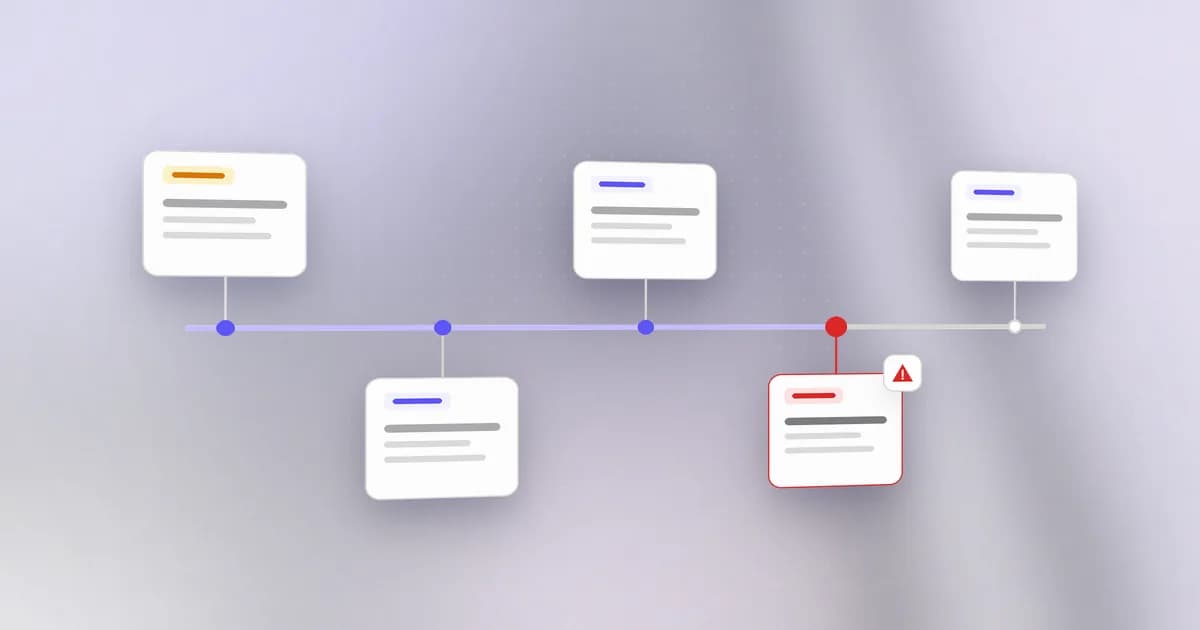
Barracuda's published timeline compresses a familiar ARTEX-era pattern into a supply-chain opening:
- Third-party engagement — Barracuda issued a cloud access key to an external vendor working on an AI-related project.
- Key persisted — Barracuda did not retire the key when the vendor finished, which the company's post-mortem treats as Barracuda's responsibility.
- Vendor-side exposure — By November 13, Barracuda's investigation confirmed the key lived in a configuration file in the vendor's GitHub repository. That repo surfaced when the vendor's development environment was compromised (Barracuda does not name the vendor in the Trust Center text).
- First use — The attacker called Barracuda's cloud APIs with the valid key (Barracuda's CISO narrative cites activity beginning November 1).
- Machine-speed pivot — Over roughly 44 hours, the actor touched about ten cloud accounts (Barracuda timeline), labeling resources with machine-style names (
iplus digits, e.g.i31911,i28324probe) rather than human-readable labels. - Secret and wallet hunting — Activity included reading secret stores, decrypting infrastructure-as-code state that often embeds credentials, pulling metadata-service credentials, and scanning for cryptocurrency material (wallet env vars, keystores, mnemonics).
- XDR credential system in scope — One system involved stores integration credentials for Barracuda XDR connectors into customer environments.
- Containment — Barracuda disabled known access, rotated affected credentials, enhanced monitoring, and began structural fixes (protected credential stores, audit logging, vendor key expiry, Kubernetes hardening).
Barracuda explicitly parallels the intrusion with automated, AI-driven activity reported across the industry since ARTEX's July 2026 debut—the same wave Google Mandiant summarized and the FBI FLASH packaged on November 13.
ARTEX fingerprints Barracuda published
Because many groups reuse ARTEX, Barracuda treats the match as modus operandi, not attribution. The November 13 Trust Center update lists additional indicators defenders can hunt:
Resource naming
- Cloud and Kubernetes names beginning with
i+ digits without hyphens (i31911,i28324probe,i19engx1). - GitHub workflow files
i19ghci.ymlandi19ci2.ymlon branches prefixedi19ghci-andi19ci2-.
Network IOCs (sample)
- IPv4:
180.178.56.10,52.128.238.126,221.146.68.107 - IPv6:
2a09:bac1:7680:3d0::26b:5b
User agents
Boto3/1.43.122,curl/8.5.0,curl/7.81.0,Python-urllib/3.10,Mozilla/5.0 (compatible; read-only-audit)
These sit alongside the behavioral picture ExtraHop's ScopeWeaver lab and Cisco Talos's exposure counts documented earlier in November—they are correlation aids, not exclusive signatures.
Third-party GitHub exposure: why coding agents should care
Barracuda's November 13 root-cause update is blunt: the initial key sat in a configuration file inside the vendor's GitHub repository, which became readable when the vendor's development environment was compromised. That is the same structural failure GitGuardian tracks when enterprises leak tokens into repos that later get cloned onto laptops running agents.
Mechanism in plain terms
- Vendor receives a long-lived cloud key for a joint AI project.
- Vendor stores it in repo config for convenience.
- Vendor dev environment breach exposes the repo.
- Attacker uses the key against Barracuda's cloud, not only the vendor.
- ARTEX-class automation enumerates accounts faster than human incident response can convene.
Coding agents exacerbate step 2 because they glob entire trees and may suggest committing .env or config.yaml changes during "fix the build" sessions. Policy should treat vendor engagement keys like production secrets: short TTL, per-repo secret manager references, and mandatory revocation tickets on statement-of-work close.
Customer impact and required actions
Barracuda draws a narrow notification boundary:
- Potentially affected: Organizations using API integrations for Barracuda Managed XDR Cloud or Monitored Endpoint that Barracuda contacted directly.
- Action for notified customers: Revoke and recreate integration credentials and review connected-system activity logs back to November 1, 2026. Barracuda points to Campus documentation and
[email protected]for questions. - Everyone else: No action required if Barracuda did not reach out.
The Trust Center states investigators found no direct evidence customer integration credentials were viewed or accessed. Barracuda still chose an assume-the-worst rotation stance for notified integrations—similar in spirit to Barracuda CISO Arve Kjoelen's public line that defenders arriving after machine-speed attackers often finish first (quoted in TechCrunch's November 16 recap of the FBI FLASH).
What Barracuda is changing internally
The advisory lists continuing work that matters for anyone issuing keys to AI vendors:
- Credential storage — Moving integration secrets to stores that stay protected even if cluster admin is compromised.
- Logging — Full audit logging on affected environments; data-access logging where missing.
- Credential lifecycle — Removing long-lived over-privileged keys and expiring vendor credentials when engagements end (the stated root cause).
- Kubernetes — Restricting privileged workloads, limiting secret readers, deploying runtime threat detection.
Those controls are cloud-native equivalents of what NIST and CISA agent incident guidance recommends for agent containment—here applied because the attacker behaved like an unsupervised agent fleet.
What this means if you run AI coding agents
ARTEX did not run inside Barracuda employees' IDEs. The incident still lands on developer and agent hygiene because the entry key lived in GitHub configuration—exactly the sort of file Claude Code, Codex, and Cursor sessions read during refactors.
Checks you can run this week
- Vendor key inventory — List cloud keys issued to contractors; tie each to an expiry ticket when statements of work close.
- Repo grep before agent sprints — Search for
AKIA,aws_access_key_id, and vendor-specific prefixes in repos your agents index; rotate anything older than the engagement. - Separate CI and laptop secrets — Keep integration keys on runners with short TTL, not in monorepo
.envfiles agents auto-load (GitGuardian's Good Samaritan disclosure shows how often enterprises leak exactly these patterns). - Hunt
i+digit cloud names — If you operate AWS or Kubernetes, run asset inventory queries for resources matching Barracuda's naming convention in the Trust Center. - XDR customers — If Barracuda notified you, complete integration-credential rotation before the next agent-driven deployment touches those connectors.
What to watch in logs
- Burst STS AssumeRole or cross-account activity within hours of a single key's first use.
- Boto3 user agents from non-automation CIDRs.
- GitHub Actions branches matching
i19ghci-*patterns if attackers reuse tooling across victims.
Reporting and evidence preservation
Barracuda customers with questions are directed to [email protected]. If you operate your own cloud and see Barracuda's sample IPs or i-prefixed resource names, preserve CloudTrail or audit logs with timestamps near November 1–2, 2026 UTC, IAM session names, and Kubernetes audit records before rolling infrastructure. For U.S. organizations, the FBI FLASH still recommends filing through ic3.gov with reference 20261113-001 when ARTEX-like automation is confirmed—Barracuda's advisory is vendor-specific, the FLASH is campaign-wide.
What Beam can and cannot do here
Beam watches local coding-agent tool calls and scans skills and MCP configs before you run them. It can flag destructive commands, credential patterns, and risky MCP wiring on the machine where Claude Code or Codex runs, and redact secrets before events hit local storage (how Beam watches).
Beam does not see Barracuda's cloud control plane, revoke vendor keys in AWS, or block ARTEX running on an attacker's console. Treat Beam as one layer on the laptop that holds keys—not a substitute for vendor key retirement or XDR integration rotation Barracuda prescribed.
Frequently asked questions
The FAQ front matter answers the highest-traffic questions in compact form; this section mirrors it for on-page readers.
What did Barracuda disclose about the November 2026 intrusion?
See the Trust Center advisory for authoritative timing (November 1–2, 2026), scope (portions of Barracuda's cloud environment), and customer-notification boundaries.
Was ARTEX confirmed?
Barracuda describes consistency with ARTEX reporting, not criminal attribution. Use the IOC block for hunting, not for legal attribution.
Do I need to rotate Barracuda credentials?
Only if Barracuda emailed you about Managed XDR Cloud or Monitored Endpoint integrations.
How did the key leak?
Via a vendor GitHub configuration file after the vendor's dev environment compromise—underscoring why agents should not freely edit vendor-repo secrets without review.
Does the FBI mention Barracuda?
The November 16 TechCrunch article on the FBI FLASH cites Barracuda alongside ConnectWise and South Korean financial campaigns; the underlying law-enforcement document remains FLASH 20261113-001.
Related reading
- FBI FLASH on ARTEX TTPs and IOCs
- ExtraHop ScopeWeaver lab behaviors
- Cisco Talos on ARTEX, PentAGI, and HexStrike MCP
- Railway October ARTEX attack chain
- November 2026 attacks timeline
Vendor versions, IOC lists, and Trust Center text reflect Barracuda's published materials as of November 16, 2026 UTC.