
The U.S. Commerce Department’s Bureau of Industry and Security (BIS) interim final rule Addressing Remote Access to Advanced Semiconductors took effect on November 19, 2026. It adds export license requirements when overseas data centers remotely supply large volumes of compute to firms ultimately parented in Country Group D:5 or Macau, tightens destination controls for Indonesia, Malaysia, Singapore, Thailand, and Brazil, and narrows how foundries and OSATs can rebut 16/14 nm logic-chip presumptions for designers in restricted countries. Nikkei Asia reports the shock is spreading beyond AI training chips into consumer SoCs, and Reuters reporting via the Straits Times says TSMC is pausing sub-16 nm orders unless customers hold U.S. export licenses.
If you run coding agents—Claude Code, Codex, Cursor, Kimi Code CLI, or a self-hosted OpenCode harness—the rule does not patch your CLI. It changes which neocloud GPUs, hosted inference regions, and Chinese open-weight routes legal and procurement teams still treat as approved. Document where prompts actually execute before compliance questionnaires tighten on the same week as Trump’s overseas data-center tax remarks.
TL;DR
| Question | Answer (as of November 21, 2026) |
|---|---|
| Am I affected? | Yes if agents call remote inference or rented GPUs in Singapore, Malaysia, Thailand, Indonesia, Brazil, or overseas pools that might serve D:5-headquartered customers—or if your stack depends on new 16/14 nm silicon clearing customs |
| Is there a patch? | No software patch—update vendor contracts, region allow-lists, and model inventories; watch BIS and Federal Register for comment deadline January 19, 2027 |
| Does data leave my machine? | Whenever you use cloud models—this rule targets hardware export paths and data-center end-uses, not local redaction |
| Coding-agent takeaway? | Treat neocloud endpoints like production regions: log hostnames, freeze agent-driven region shopping, and align with OWASP neocloud questions |
What the Federal Register rule changed on November 19, 2026
Commerce published the rule as document 2026-23529 with effective date November 19, 2026. The preamble groups four moves that matter for agent infrastructure:
1. Remote data-center end-use (new § 744.24). Exporters, reexporters, and transferors need authorization when they have knowledge that advanced Super Intelligence items will be used in data centers that provide more than 12,000,000 aggregate TPP—at a single site or across linked data centers—to companies headquartered in, or whose ultimate parent is headquartered in, Macau or Country Group D:5. The Federal Register defines linked data centers as facilities connected by networking that share resources as a unified whole, including digitally linked infrastructure.
The rule is explicitly aimed at preventing D:5-headquartered firms from training advanced models through overseas cloud or colocation that would be restricted if the silicon shipped directly to them. BIS repeats guidance that “for an entity” is not limited to ultimate consignees—indirect access counts.
Exception: A commercial recommender system carve-out applies when SI is exclusively used to rank or suggest products or content—not to generate novel text, code, images, or software in response to prompts. That line matters when counsel asks whether a code-completion API is “recommendation” versus “generation”; the Federal Register text draws the boundary at novel content generation.
2. Southeast Asia and Brazil destination licenses (§ 742.6). Advanced computing items now require licenses for export, reexport, or transfer to or within Indonesia, Malaysia, Singapore, Thailand, and Brazil, reviewed case-by-case for diversion risk. A U.S.-headquartered ultimate consignee exclusion exists if parties meet new reporting under § 743.10.
3. Foundry and OSAT presumptions (Note 1 to 3A090.a). For applicable advanced logic integrated circuits—16/14 nm or below, or non-planar transistors—fabricators must presume 3A090.a data-center chips unless an authorized designer attests otherwise. The IFR removes pathways where foundries or approved OSATs rebutted that presumption using transistor-count attestations for designers located in, or ultimately parented in, D:1, D:4, D:5, or the five newly licensed destinations unless the designer is on BIS’s approved list.
4. AI Diffusion Rule rescission. The same document formally rescinds the Biden-era AI Diffusion Rule BIS had left unenforced—dropping ECCN 4E091 model-weight controls and related license exceptions in favor of this destination plus end-use package.
Transition shipments: Items en route on November 19, 2026 under prior eligibility may complete export by December 21, 2026, per the rule’s transition language—relevant if your neocloud vendor had GPUs already moving through Singapore or Malaysia hubs.
Mechanism: why foundries reacted within a day
The Federal Register mechanism is presumption, not a headline ban on coding tools.
Before November 19. TSMC could, for some Chinese designs, examine technical characteristics and determine a chip fell outside U.S. controls without each customer holding an individual license—a compliance route Reuters describes as closing when the IFR took effect.
After November 19. Reuters reporting summarized by the Straits Times says TSMC told affected customers that orders at 16 nanometers and below should halt unless U.S. export licenses are in place, and that Chinese designers are generally steered toward 28 nm and 40 nm flows without HBM or advanced packaging unless licensed otherwise. TSMC emailed Reuters: “TSMC is aware of and will comply with the new Bureau of Industry and Security regulations as applicable.”
Samsung. The same Straits Times / Reuters summary notes that the Financial Times reported on November 19 that Samsung Electronics also suspended some chip shipments to Chinese customers after the rule took effect. Beam did not independently verify Samsung’s customer notices.
Broader than AI training silicon. Nikkei Asia quotes multiple industry executives saying the Thursday controls are hitting mobile and consumer SoCs and affecting developers beyond China—not only the advanced AI accelerators coding agents usually name in READMEs.
Due diligence expansion. The same Reuters piece says TSMC guidance now scrutinizes operating locations, parent companies, shareholders, packagers, and shipping routes, including orders through overseas subsidiaries in Taiwan, the U.S., Europe, Japan, and Southeast Asia. An agent team that routes fine-tuning jobs through a shell tenant in Singapore may trigger the same procurement review as a GPU purchase.
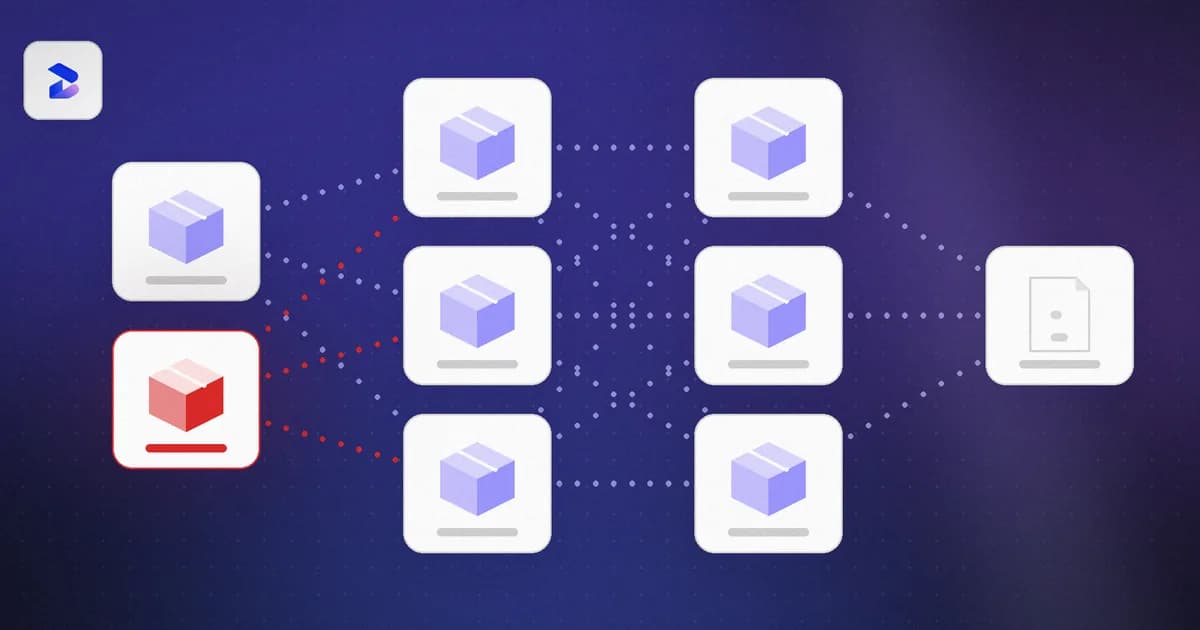
Step-by-step, the supply-chain attack surface for agents looks like this:
- Silicon export — Can the GPU or SoC legally reach the colocation that hosts your inference API?
- Data-center end-use — Does the operator need a § 744.24 license because a D:5-headquartered customer receives more than the rule’s 12 million aggregate TPP threshold remotely?
- Destination — Does shipping to Singapore, Malaysia, Thailand, Indonesia, or Brazil require a § 742.6 license even when the training job is American?
- Procurement — Does your employer shrink approved MCP servers and model APIs that depended on now-paused foundry slots?
None of those steps runs on your laptop’s shell hook. All of them can change base_url overnight.
What this means if you run AI coding agents
1. Map compute, not marketing names. Record:
- Inference hostname and cloud region from IDE logs or
curl -vtraces - Neocloud tenant and GPU SKU from provider consoles
- Whether jobs use linked pools advertised as multi-region (Federal Register “linked data centers” language matches how neoclouds market burstable capacity)
- Ultimate parent of the inference vendor—not only the subsidiary on the invoice
The Chinese AI disclosure push and Pax Silica declaration already asked teams to inventory model routes; this rule adds hardware-export and data-center end-use questions to the same spreadsheet.
2. Freeze agent-driven region shopping. An agent asked to “find the cheapest GPU region” can move source code and secrets into a newly licensed destination (for example Singapore or Malaysia) without a human reading § 742.6. Treat region changes as change-controlled deploys—ticket, approver, rollback DNS.
3. Ask neocloud vendors BIS-shaped questions. Use the OWASP neocloud Top 10: Who is the ultimate parent of each tenant on shared metal? Does the operator track aggregate TPP per customer? Will D:5-headquartered end users share linked data centers with your jobs?
4. Separate chip supply from daily Copilot calls. Most IDE traffic still rides existing hyperscaler regions. The November 19 rule plus foundry pauses primarily threaten new capacity and self-hosted GPU rentals—but procurement may preemptively block Southeast Asian endpoints. Capture before/after when settings.json or gateway routes change.
5. Watch written sources. Monitor Federal Register BIS documents, bis.gov, and vendor trust pages—same discipline as waiting for Treasury text on overseas data-center taxes.
Read-only checks today:
# Hostnames your harness hits (paths vary by product)
grep -h 'api\\.' ~/.config/*/logs/*.log 2>/dev/null | head -30

# Enterprise gateways often log region and model_slug
grep -h 'model' /var/log/your-inference-gateway/access.log 2>/dev/null | head -20
Vendor paths differ; the goal is durable logs, not one UI screenshot before the next policy memo.
How Beam handles this
Beam watches local agent actions, scans skills and MCP configs with eleven heuristic patterns plus an MCP version-pin check, can deny risky PreToolUse commands for Claude Code and Codex when cached workspace policy is present, and keeps an on-device audit trail with redaction before storage.
That helps when compliance asks what the agent did last Tuesday after procurement narrows approved regions. Beam does not determine whether a hostname resolves to Singapore versus Virginia, does not enforce EAR or BIS licenses, and does not block outbound API calls by country. Scanning is heuristic, not export-law compliance.
For workstation evidence while legal teams interpret Commerce rules, see agent monitoring basics and MCP supply-chain hygiene.
What people are asking
What is the Commerce Department responsible for here? BIS administers the Export Administration Regulations; this IFR changes license requirements on chips and data-center end-uses—not consumer app store rules.
Does the rule rescind the AI Diffusion Rule? Yes, formally in the same Federal Register document—model-weight ECCN 4E091 controls are removed while destination and § 744.24 end-use controls expand.
Will Singapore still host my agent’s API? Possibly, but new exports of advanced items to Singapore may need licenses unless exclusions and reporting apply. Ask your provider for written status, not forum guesses.
Is this only about China? D:5 and Macau remote-access controls are central, but destination licenses for Indonesia, Malaysia, Singapore, Thailand, and Brazil hit non-Chinese neocloud strategies too—and Nikkei cites impact on non-Chinese developers.
Frequently asked questions
The FAQ block in front matter mirrors these answers for schema.
When did the BIS remote access semiconductor rule take effect?
November 19, 2026, per Federal Register document 2026-23529.
What TPP threshold triggers the data-center license?
More than 12,000,000 aggregate TPP supplied directly or indirectly to D:5- or Macau-headquartered firms, including via linked data centers.
Did TSMC confirm compliance?
TSMC told Reuters it is aware of and will comply with applicable BIS regulations, per the November 20 Straits Times/Reuters summary.
Does this replace Pax Silica procurement rules?
No—Pax Silica is allied policy coordination; this IFR is enforceable EAR text. Both push the same inventory work for coding-agent stacks.
Can agents auto-select a new GPU region legally?
Technology cannot answer that—your legal team must, based on vendor due diligence. Agents should not migrate regions without human approval.
Where do I comment on the rule?
BIS accepts comments on the IFR through January 19, 2027, per the Federal Register notice.
Related reading
- Trump overseas data-center tax and agent residency
- Pax Silica and coding-agent supply chains
- Chinese AI disclosure and Cursor/Kimi routes
- OWASP neocloud risks for agent users
- What AI agent monitoring tracks
- MCP security practical guide
Primary sources: Federal Register — Addressing Remote Access to Advanced Semiconductors (2026-23529) · Nikkei Asia — broader chip supply-chain disruption · Straits Times / Reuters — TSMC guidance and compliance statement
Federal Register section numbers, effective dates, and TSMC’s emailed statement are accurate as of November 21, 2026. Confirm license status with counsel before rerouting production inference.