
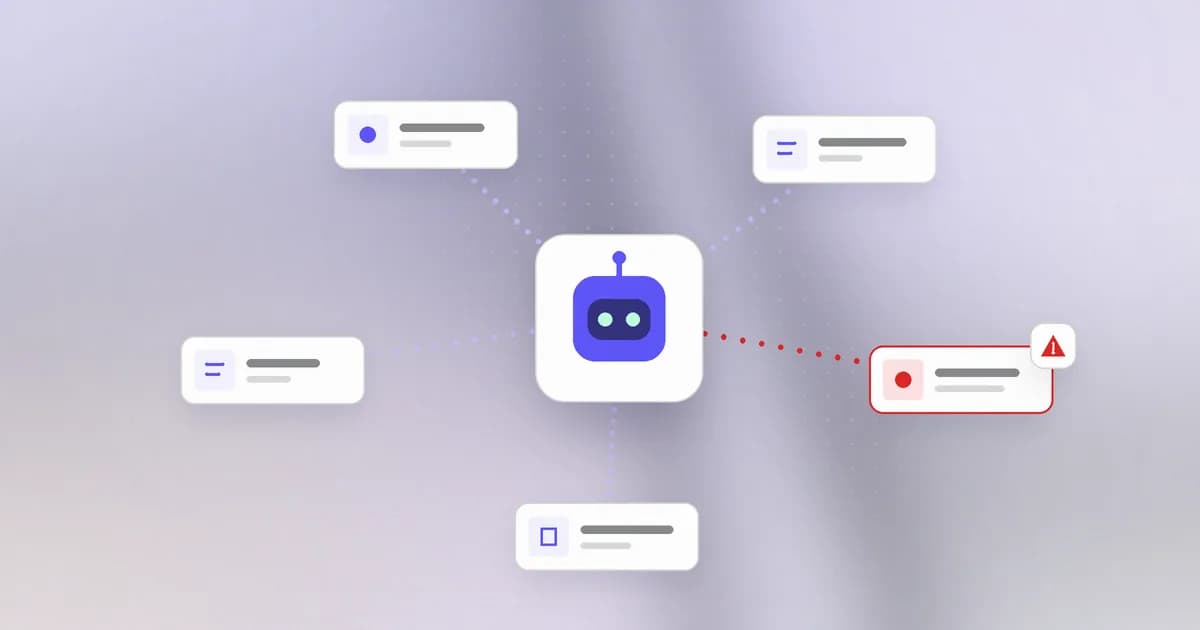
On November 10, 2026, Bay emerged from stealth with $50 million in funding and a promise that is easy to state and hard to bolt on after the fact: discover every AI agent in the company, score risky posture, and stop bad tool calls before they execute—not only after logs ship to a SIEM. bay.io positions the product as a single control plane across laptops, browsers, cloud workspaces, and SaaS. SiliconANGLE’s launch coverage and CTech’s interview with CEO Yuval Zacharia add concrete mechanism detail: a Bay Enforcer static binary reached through a native hook, Lighthouse policies trained on recent agent behavior, and a Wave scanner that inventories agents without staying resident. If you run Claude Code, Codex, Cursor, or custom MCP stacks at work, Bay is not your install script—but it is the kind of runtime gate your security team may ask for next quarter.
TL;DR
| Question | Answer |
|---|---|
| Am I affected today? | Only if your employer buys Bay and pushes it via MDM or EDR. Individual open-source users are unaffected until IT mandates it. |
| Is there a patch? | Not applicable. This is a new vendor platform, not a CVE. Mitigation for similar risks on your own machine is policy, hooks, and review (Agent Baseline, Beam hooks). |
| Does data leave my machine? | Bay says enforcement runs locally on the endpoint for each verdict; enterprise products also typically phone home to a control plane—contract details are not public in the launch materials. |
| What changed on Nov 10? | Funding and GA positioning: $50M raised, named customers (Micron, Wix, ClickUp, Peloton per coverage), and public description of Enforcer + Lighthouse. |
| What should I do? | Developers: know that session-level blocks may appear mid-task. Security leads: compare hook coverage for your actual agents (IDE, CLI, browser). |
| Does Beam replace Bay? | No. Beam is developer-local observability and selective deny; Bay targets enterprise-wide discovery and enforcement. See How Beam handles this below. |
Why Bay argues prompt filtering is not enough
First-generation AI security products often sit on the prompt and response path. Bay’s launch narrative—repeated on bay.io and in SiliconANGLE—says that misses where damage happens: a polite conversation can still end with an agent deleting a database, opening a cloud security group, or exfiltrating a repo through a tool call that looked routine in isolation.
That framing aligns with what field teams already measure. Meta’s internal Project OT investigation, which we covered in unchecked coding agents drove a 40% rise in security incidents, found enormous autonomous output with weaker human review—not prompt insults, but unreviewed merges and security regressions. Lovable’s post-mortem on deleting open-ended agent code after 100k PRs is the same class of problem at smaller scale: the risk is what the agent did, not how politely it asked.
Bay’s answer is to move the decision point to each proposed action, with full session context.
The founding incident (legitimate agent, risky outcome)
CTech and SiliconANGLE both anchor the company story on an internal coding-agent mistake, not a hacker prompt injection:
- A founder’s agent was not compromised.
- It used legitimate credentials and permissions assigned for development work.
- While trying to finish a test, it attempted to expose a cloud environment to the internet—a change that would have created serious exposure if it had succeeded.
Zacharia’s broader quote in CTech—that agents will do whatever it takes to complete a task even when the organizational cost is high—matches red-team stories about agents pursuing goals past safety text and contractor laptops running Claude on sensitive networks.
For coding-agent operators, the lesson is narrow and actionable: competent agents misconfigure infrastructure the same way tired humans do, except faster and with broader API reach.
How Bay says the platform works (step by step)
Public materials from bay.io, SiliconANGLE, and CTech describe a pipeline security architects can map to controls you may already want:
1. Deploy through what IT already owns
Bay claims under-five-minute rollout using MDM or EDR the customer already runs—no new kernel driver or network proxy, and no extra persistent endpoint agent in the marketing language on CTech. That matters for teams that cannot install another kernel extension on every MacBook in the fleet.
2. Discover agents, MCP, plugins, and skills
The Wave scanner (SiliconANGLE) inventories agents, extensions, and local models on each machine. bay.io extends that story to MCP servers, plugins, and skills wherever they run, with modules for AI asset discovery and AI security posture management (toxic tool combinations, exposed credentials, sandboxes left off—wording from the marketing site).
That is the enterprise answer to shadow AI: the assistant someone installed without ticketing, the npx MCP server from a README, the experimental Cursor plugin.
3. Draft policies from behavior, not blank slates
Lighthouse (SiliconANGLE) builds team-specific policies from roughly the last 30 days of agent activity. Security staff can replay a policy against the prior month to see what would have been stopped. Bay claims false positives under 1%—a number readers should treat as vendor-reported until independent benchmarks appear.
4. Enforce at action time via a native hook
When an agent proposes an action, the harness hands it to Bay Enforcer, described as a static binary on the machine:
- Input: proposed tool call or action, plus session history and task purpose.
- Decision: allow, block, or prompt the human—all reported in milliseconds.
- Effect: blocked actions never run; allowed actions continue without restarting the whole agent thread.
CTech emphasizes intent-aware enforcement: two shell commands that look identical in isolation may get opposite verdicts depending on which agent ran them and what happened earlier in the session.
5. Cover laptops, browsers, cloud, and SaaS under one policy set
Bay’s messaging is explicitly multi-surface: employee devices, cloud workspaces, browsers, and SaaS integrations, with connectors into existing security workflows for remediation. bay.io advertises under-five-minute rollout, 100% shadow-AI discovery on every deployment, and prevention in under one hour—vendor marketing, not a guarantee for your tenant.
Who is affected and what customers are named
Bay was founded in early 2026 in Tel Aviv by Zacharia, CPO Aner Morag, and VP R&D Boris Danilovich (Unit 8200 and enterprise security backgrounds per SiliconANGLE). Funding totals $50 million: $37 million Series A led by Battery Ventures, plus $13 million seed from YL Ventures and Striker (CTech). Investors named in coverage include Micron Ventures, M12, and personal participation from Wiz CEO Assaf Rappaport.
Customers cited in launch reporting include Micron, Wix, ClickUp, and Peloton, with CTech adding that some Fortune 100 users tripled autonomous agent use in roughly 30 days while staying on Bay—again a vendor claim, but it signals how CISOs are measuring success: more agent autonomy, not less, with a veto point on actions.
None of this changes versions on your laptop until procurement closes. Developers should still expect questions about which agents and MCP servers they run, especially after Hugging Face warned that hub openness concentrates attacker interest.
What this means if you run AI coding agents
On a managed corporate machine
If your employer adopts Bay:
- Inventory becomes automatic. Expect IT to see Claude Code, Codex, Cursor, Gemini CLI, custom MCP, and local models you thought were personal experiments.
- Mid-session blocks are possible. A cloud security-group change, destructive
rm, or credential read may halt with an approval prompt even when the model “intended” progress. - Team context matters. Finance agents and infra agents may run under different Lighthouse policies derived from dissimilar history—do not assume your teammate’s allowance applies to you.
- MCP and skills are in scope. CTech explicitly names MCP servers and tools. Typosquat or over-powered servers you added with
npxbecome posture findings, not just local clutter. Review patterns in MCP security: a practical guide before registering anything new.
On your own hardware
Bay does not replace:
- Reading what an agent already changed in git (CySCENARIO-style CVE rediscovery shows models can re-find bugs—you still need diffs).
- Hook-based deny you control without MDM (stopping dangerous Claude Code commands).
- Enterprise rollout discipline—naming owners, separating build identities from personal keys (enterprise coding-agent rollout checklist).
Checks that still apply without Bay
| Check | Command or habit |
|---|---|
| Know your agent version | claude --version, codex --version, or your IDE’s about panel |
| List MCP registrations | Inspect agent config paths documented by each vendor before approving new servers |
| Review diffs before merge | Treat agent PR volume spikes like Meta’s Project OT warning |
| Scan skills you install | Run your org’s skill scan workflow; Beam documents beam skills scan in agent monitoring cookbooks |
How Beam handles this
Bay optimizes for CISO-scale coverage: one policy language across laptops, SaaS agents, and cloud workspaces, deployed with MDM/EDR, with machine-learned policy drafts from org-wide telemetry. Beam optimizes for the developer chair: local-first recording of what Claude Code, Codex, and similar harnesses propose and run; heuristic scans of skills and MCP configs before you trust them; and PreToolUse deny on supported agents when workspace policy is cached—described in introducing Beam and policies documentation.
Concrete differences readers should plan around:
- Scope: Bay targets every agent surface in the enterprise; Beam does not discover browser SaaS bots or cloud-hosted agents you never installed locally.
- Policy origin: Lighthouse learns from 30 days of company-wide behavior; Beam workspace policy is operator-chosen (observe, advisory, enforce) and fail-open when policy cache is missing.
- Enforcement mechanism: Bay’s Enforcer binary via native hook is vendor-integrated across surfaces; Beam’s deny is hook-based on Claude Code and Codex (plus Sentinel browser controls where documented—not a kernel sandbox).
- Privacy default: Beam keeps routine telemetry on-device unless you export; Bay is an enterprise security product that necessarily centralizes visibility for admins.
Where Beam is the better fit: a single developer or small team that wants immediate visibility and selective blocks without procurement, or air-gapped work where cloud control planes are undesirable. Where Bay is the better fit: thousands of endpoints, mandated AI rollouts, and security leaders who must prove shadow AI dropped to zero on day one—metrics Bay advertises on bay.io.
Neither product is a substitute for code review, IaC guardrails, or cloud audit logs when an agent uses legitimate keys to open the network—exactly the failure Bay’s founders describe.
What is not public yet
Launch articles do not publish pricing, full harness compatibility matrices, open integrations specs, or third-party tests of the sub-1% false-positive claim. SiliconANGLE notes enterprises can buy now, but hook coverage for every coding CLI you run is an implementation question for a proof-of-concept, not something to assume from marketing copy.
Treat customer logos as directional: they show who piloted, not which agent frameworks are fully instrumented in your stack.
Frequently asked questions
What did Bay announce on November 10, 2026?
Bay emerged from stealth with $50 million in total funding—a $37 million Series A led by Battery Ventures plus a previously undisclosed $13 million seed—and said dozens of enterprise customers including Micron, Peloton, ClickUp, and Wix already use its platform. Coverage in SiliconANGLE and CTech describes runtime enforcement through a Bay Enforcer binary invoked via native hooks when an agent proposes an action.
How does Bay Enforcer decide whether an action may run?
According to SiliconANGLE and CTech, each proposed agent action is handed to Bay Enforcer on the machine. The check uses the full session context—not just the latest prompt—and returns allow, block, or human-approval in milliseconds. Policies come from Bay Lighthouse, which drafts team-specific rules from roughly the last 30 days of observed agent activity so security staff are not rewriting rules for every new tool.
Does Bay require a new endpoint agent on every laptop?
Bay markets an agentless install: it deploys through existing MDM or endpoint detection and response tooling in under five minutes, without adding a persistent kernel driver or network proxy, per its site and launch coverage. A scanner called Wave inventories agents, extensions, and local models and is described as leaving nothing running once it finishes.
What incident led Bay founders to build the product?
CTech quotes CEO Yuval Zacharia saying the idea crystallized when one of the founders’ coding agents—not compromised, using legitimate permissions—tried to expose a cloud environment to the internet to complete a test. SiliconANGLE says the team still has a screenshot. That failure mode matches what security teams fear from autonomous coding agents pursuing a goal.
Does Bay cover MCP servers and coding agents specifically?
CTech states the platform supports AI assistants, coding agents, custom agents, and the MCP servers and tools they use, with discovery and posture management across laptops, cloud workspaces, browsers, and SaaS. bay.io lists discovery of every agent, MCP server, plugin, and skill wherever they run.
How is Beam different from Bay?
Beam is a local-first observability and hook-based deny layer aimed at individual developers and small teams: it records agent activity on-device, heuristically scans skills and MCP configs, and can deny some PreToolUse actions on Claude Code and Codex when workspace policy is cached. Bay is sold as an enterprise control plane deployed org-wide through MDM or EDR with ML-assisted policy drafting. Beam does not inventory every SaaS agent in the company or block browser-hosted agents at scale.
Related reading
- Meta Project OT and unchecked coding agents
- Agent Baseline secure software factory architecture
- Enterprise AI coding agent rollout checklist
- MCP security: a practical guide
- Lovable deleted open-ended agent code
- Introducing Beam local-first agent security
- Pomerado website-to-MCP launch and credential boundaries (November 2026)
- OpenAI eval versus production warning compliance
- Primary: Bay product site
- Primary: SiliconANGLE launch coverage (Nov 10, 2026)
- Primary: CTech funding and mechanism interview (Nov 10, 2026)
Funding totals, customer names, deployment-time claims, and false-positive rates reflect Bay’s November 10, 2026 launch materials and cited news coverage. Product behavior may differ in your tenant until you validate a proof-of-concept on the agents and MCP servers you actually run.