
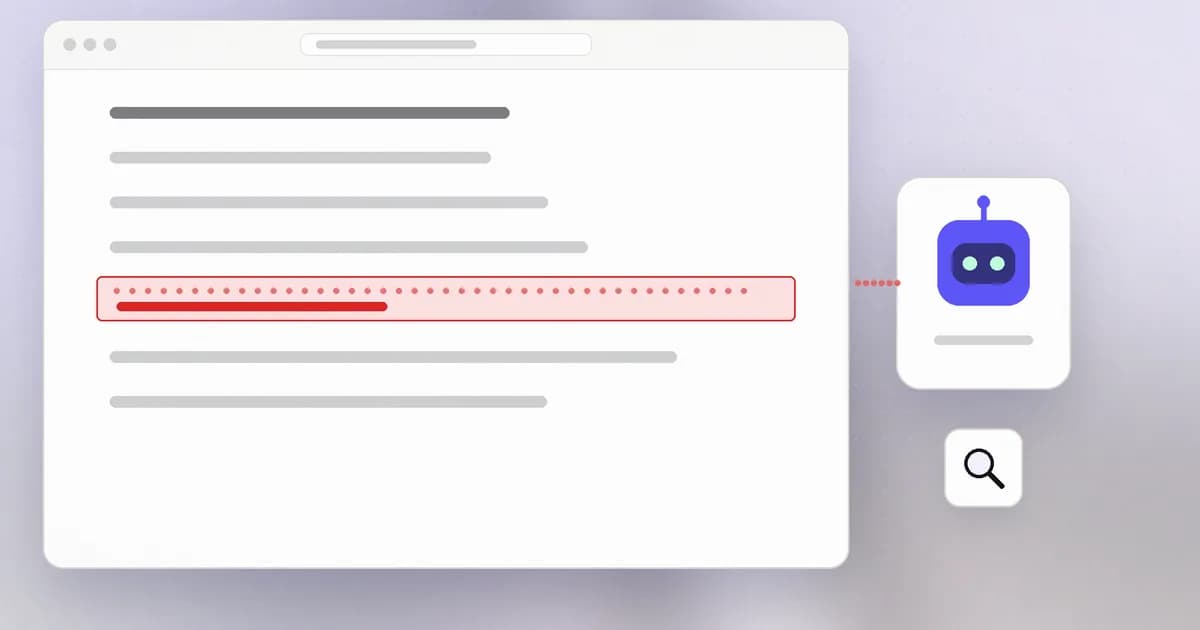
At Microsoft Ignite on November 17–18, 2026, Microsoft AI (MAI) shipped two model families that change what runs behind everyday coding and security agents: MAI Code 2 for GitHub Copilot and MAI-Cyber-2-Flash for Codename MDASH and Microsoft Perception. In his Ignite keynote transcript, Satya Nadella said MAI Cyber already powers more than 40 percent of Perception code scans, and that MAI Code Flash had three million Copilot users last month before Code 2 replaced the flagship tier.
If you run coding agents—Copilot CLI, Claude Code on Azure repos, or CI jobs that call MDASH—you need to know which model is generating patches and security findings, because Microsoft is optimizing for always-on, lower-cost agents, not one-shot chat.
explainx.ai covered the wider Ignite announcement list; this post focuses on MAI Code 2, MAI Cyber 2 Flash, and what to verify on developer machines.
TL;DR
| Question | Answer |
|---|---|
| Am I affected? | Yes if you use GitHub Copilot, Foundry agents, or MDASH / Perception code scanning |
| Is there a fix? | No vulnerability—this is a model rollout. Pin or document model choice in Copilot and MDASH settings |
| New default coder? | MAI Code 2 and Code 2 Flash GA in Copilot model picker and Copilot Fusion |
| New default scanner? | MAI-Cyber-2-Flash preview in MDASH; auto-replace in MDASH MAI profile mid-December 2026 for eligible tenants |
| Agent risk shift? | Cheaper models → more autonomous scan-and-fix loops; same need for human review on patches |
| Does data leave my machine? | Copilot and MDASH are cloud; local Claude Code/Codex unchanged unless you add Foundry APIs |
What Microsoft announced
MAI Code 2 for agentic coding
Microsoft describes MAI Code 2 as its cost-performance flagship for enterprise coding agents: production debugging, multi-file implementation, repo-wide reasoning, and UI work. MAI Code 2 Flash targets high-volume tasks—explanations, small edits, routine fixes.
Shipping surfaces, per the official Ignite blog and Azure AI Foundry post:
- GitHub Copilot — model picker and Copilot Fusion
- Microsoft Foundry — same models for custom agents
- Partner routers (OpenRouter, Vercel, Hermes, Open Code, Kilo) listed as coming
The Decoder's Ignite summary adds benchmark and pricing detail Microsoft cited in press materials: internal tests on DeepSWE 1.1, Terminal Bench 2.1, SWE-Atlas, and FrontierCode v1.1; promotional Copilot token prices through May 17, 2027; then higher list rates.
The important security angle is not benchmark bragging—it is volume. When a model costs a fraction of GPT-6.1 Sol or Claude Opus 5.5 per task, organizations run more agent loops per day on the same CI budget. That increases patch velocity and PR noise—the same organizational stress Sen. Mark Warner described during November's outage week, even though Ignite's story is product economics, not FAA routers.
MAI Cyber 2 Flash for vulnerability agents
MAI-Cyber-2-Flash is Microsoft's preview cybersecurity model trained inside the MDASH harness, per the Microsoft Security Blog and Perception Ignite post.
Capabilities Microsoft emphasizes:
- Discovery, validation, and remediation in one agentic loop
- MDASH repo scans up to 5 GB, including regulated cloud targets
- Integration with Perception playbooks—red team simulation, blue team triage, green team fix—so Web App Pen Test Agent and Risk Reduction Agent can consume MDASH findings
Microsoft told The Decoder that MAI Cyber models already handle nearly 40 percent of scans on MDASH, and that MAI Cyber 2 Flash will automatically replace the prior model in the MDASH MAI profile starting mid-December 2026 for eligible customers—meaning many teams will not explicitly opt in.
CyberGym benchmark hygiene matters for trust: Microsoft said ~10 percent of ~900 CyberGym tasks overlapped open-source training data; it removed those tasks before scoring all models. That is the right disclosure pattern when a security scanner model is graded on vulnerability tasks drawn from public repos—the same repos your coding agents clone daily.
Perception: agents inside agents
Microsoft Perception is now generally available, framing security as teams of agents (red, blue, green) orchestrated through playbooks. MDASH is one green-team input; MAI Cyber 2 Flash is the model brain for a growing share of those scans.
This stacks on top of GitHub MDASH going open source—where Microsoft documented 9,791 AI findings → 99 verified OSS reports. The Ignite update is which model performs the next million findings, at what cost, and whether fixes land as auto-PRs in repos your Copilot agent also edits.
Mechanism: from model picker to merged patch
A typical loop after Ignite looks like this:
- Developer enables MAI Code 2 in Copilot for a service repo (or Fusion picks it automatically).
- MDASH or Perception runs on a schedule or on PR, using MAI-Cyber-2-Flash to rank CVEs.
- Green agents or MDASH propose remediations—sometimes as pull requests.
- Copilot on the same repo accepts the PR context and extends the patch across neighboring files.
- CI runs tests; no human may have read the workflow YAML or Dockerfile diff if volume is high.
That is efficient when findings are real. It is hazardous when:
- The scanner model hallucinates a vulnerable path (false positive) and the coder model "fixes" working code.
- The coder model applies a partial patch that breaks handoffs between legacy subsystems—the failure mode federal officials described as patch-and-upgrade strain in the November outage cluster.
- A compromised dependency still sits in the tree—see agent-framework 1.26.1 on PyPI the same week as Ignite.
None of that is unique to MAI models, but cheaper tokens lower the organizational friction to run more loops per night.
What this means if you run AI coding agents
Copilot and Foundry users
- Open Copilot settings (IDE and CLI) and note which model is default after Ignite. Screenshot or export policy if your enterprise manages Copilot centrally.
- Treat MAI Code 2 like a new dependency: run your existing test suite on a branch before widening auto-merge rules.
- If agents use
copilotor Foundry SDK in CI, pin model IDs in workflow env vars the way you pinactions/checkoutSHAs. - Do not disable secret scanning because the model is "Microsoft official"—this week's PyPI hijack came from Microsoft's own package name.
MDASH and Defender users
- Check whether your tenant is in the mid-December auto-replace cohort for MAI-Cyber-2-Flash.
- Compare finding counts and false-positive rate for two weeks before and after the switch—Microsoft's blog promises efficiency, not zero noise.
- Require human review on MDASH PRs that touch auth, network policy, Terraform, or GitHub Actions—the same paths STORM-0940 style attacks use.
- If you run Forge's Linux kernel campaign class findings, confirm which model triaged each CVE before agents batch-upgrade kernels Friday night.
Local Claude Code, Codex, or Cursor users
No automatic change—MAI models run in Microsoft's cloud. You are affected indirectly when:
- You review Copilot-generated PRs from teammates
- Your org mandates MDASH gates on main
- You depend on Azure OpenAI routing that may shift traffic to MAI endpoints in Foundry
Keep local hooks and skill/MCP scans on your laptop; cloud scanner upgrades do not replace on-device observation.
How Beam handles this
Beam does not choose Copilot or MDASH models and does not intercept Foundry traffic. It does help on the same machine where you approve agent actions:
- PreToolUse hooks for Claude Code and Codex can deny destructive shell proposals while you review a MDASH-suggested fix locally.
- Heuristic skill and MCP scanning (11 patterns plus version-pin check) catches risky install instructions before you paste a Perception playbook into a skill repo.
- On-device event history with redaction before storage gives you an audit trail when you manually apply or reject scanner PRs.
Beam is not a kernel sandbox and not a substitute for MDASH or Perception; it watches your agent harness on your laptop. See agent runtime security and coding assistant security.
Licensed weights and routing: second-order agent effects
Ignite also advertised MAI Licensed Weights—enterprise fine-tunes in customer-controlled Azure with weights that stay in the tenant unless the customer opts into training reuse, per the Ignite blog. That matters for coding agents when security teams fine-tune MAI Cyber on internal CVE text and then expose the endpoint to Copilot Fusion or a Foundry agent. Your data boundary moves from "prompts only" to weight access—a different question for DLP and secret scanners than vanilla Copilot chat.
Microsoft-Decision-1.1 (routing/classification) also shipped broadly in Foundry. The Decoder reports it routes requests with calibrated confidence and abstain when information is incomplete—Copilot uses it to choose between Copilot and Cowork flows. Agent harnesses that chain router → coder → MDASH fixer now depend on three MAI models agreeing; a mis-route sends a security task to a cheap flash coder or vice versa. Log router decisions when debugging bad patches.
Comparison: what changed from last month's MDASH story
In early November, Beam covered MDASH open source—the harness and triage story. Ignite's update swaps the model brain inside that harness:
| Layer | Before Ignite week | After MAI Cyber 2 rollout |
|---|---|---|
| Scanner harness | MDASH multi-agent pipeline | Same, plus 5 GB repos and regulated cloud |
| Model default | MAI Cyber 1.1 Flash mix | MAI-Cyber-2-Flash taking ~40%+ scans |
| Coder in same PR loop | Often GPT-class partner model | MAI Code 2 default in Copilot picker |
| Your laptop hooks | Still required | Still required—cloud swap does not remove local risk |
What to watch next
- Mid-December 2026 MDASH profile auto-replace mailings and changelogs
- Microsoft publishing agentic tool benchmarks with safety measures (promised for MAI Cyber family)
- MAI Licensed Weights availability—fine-tuned cyber models in your Azure boundary change data residency, not local IDE behavior
Related reading
- GitHub MDASH: 9,791 findings to 99 verified reports
- Microsoft agent-framework 1.26.1 PyPI stealer
- Microsoft Guardian agents as insiders
- November outage patch-pressure context
- Secure coding agents solution
Frequently asked questions
What is MAI Code 2?
MAI Code 2 is Microsoft's Ignite 2026 flagship agentic coding model in GitHub Copilot and Foundry, with Code 2 Flash for cheaper high-volume edits.
What is MAI Cyber 2 Flash?
A preview cybersecurity model for MDASH and Perception, co-trained in the MDASH harness, replacing older MAI Cyber scans for eligible tenants from mid-December 2026.
Should I auto-merge MDASH pull requests after the model switch?
No. Treat them like any agent patch: one CVE per change, human review on workflows and infrastructure files, staged rollout.
Primary sources: Microsoft Ignite blog (Nov 17, 2026), Nadella Ignite keynote transcript, Microsoft Security Blog — Perception, Azure AI Foundry MAI models post, The Decoder benchmark summary
Specifications and pricing are accurate as of November 18, 2026; confirm token meters and MDASH enrollment in your tenant before changing production agent policy.