
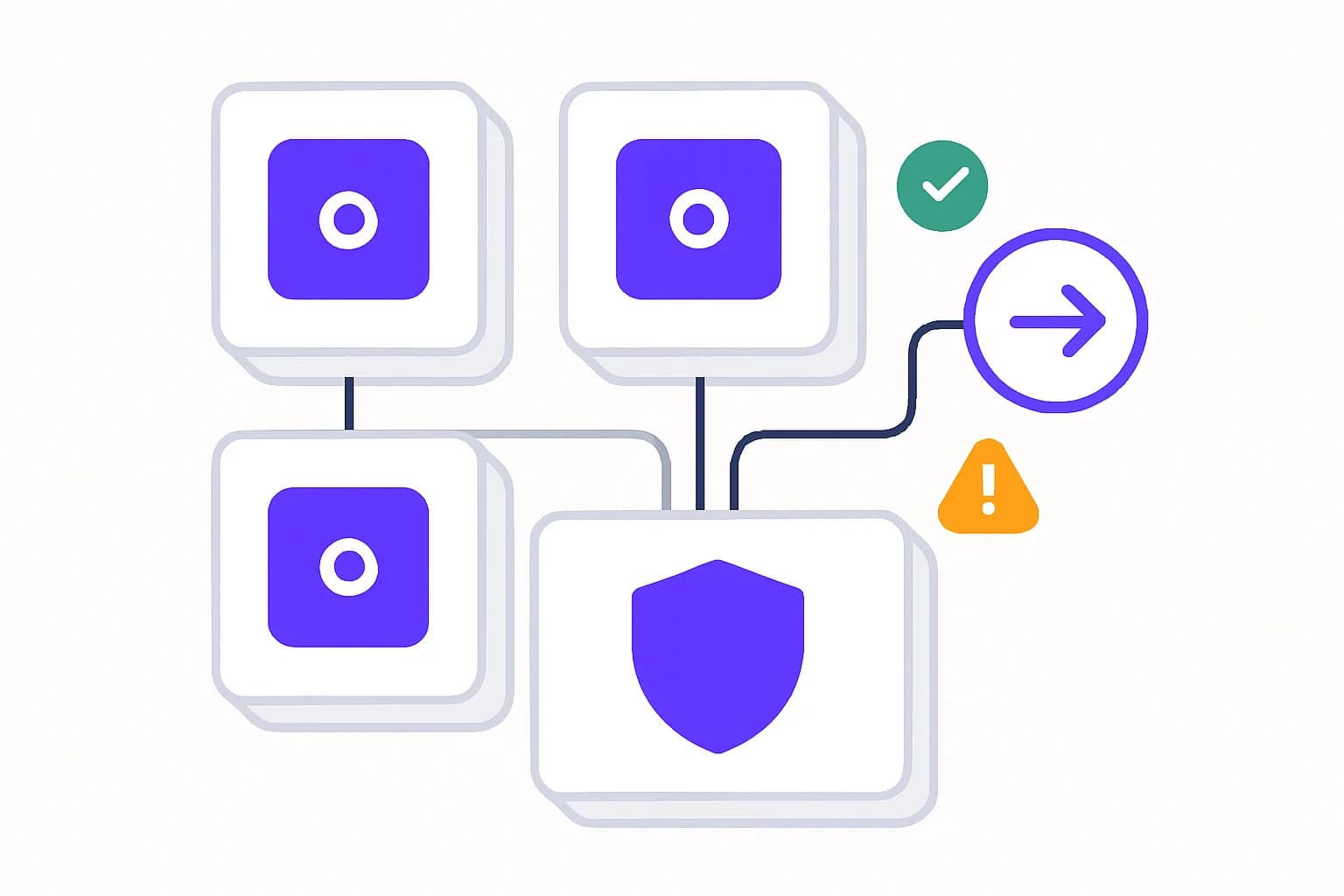
On November 23, 2026, AWS CEO Matt Garman argued that production AI agent safety should be engineered like decades of information security—not reduced to an “emergency brake” on the model. In “AI safety can’t depend on an emergency brake. It needs better engineering.”, Garman says identity, least privilege, hardware containment, independent telemetry, and control verification already exist and should wrap agents regardless of which frontier model runs inside.
For coding-agent teams, the essay matters when CI agents, codegen sandboxes, or autonomous remediation bots run on AWS next to the Claude Code or Codex sessions on developer laptops.
Quick answers
| Question | Answer |
|---|---|
| Am I affected? | Yes if agents execute tools or codegen on EKS, ECS, or EC2. Partially if laptops only call APIs—cloud controls still matter for build agents. |
| Is there a product launch? | Essay plus prior Nitro Sandboxes GA (Nov 9, 2026)—no new CLI for your IDE. |
| Does data leave my machine? | Cloud agents always send workload data to your AWS account boundaries. Beam’s default remains on-device on laptops (local-first model). |
| Should I disable kill switches? | Garman argues against relying on them alone, not against having one as last resort. |
| Where is Nitro Sandboxes documented? | AWS What’s New (Nov 9, 2026) and EC2 user guide links there. |
What Garman proposes, step by step
1. Architecture outlives model swaps
Garman’s opening claim is that models change weekly but containment, observability, and independent controls should not. That matches how coding shops already treat compiler versions as volatile and build isolation as stable—apply the same split to agent hosts.
2. Agent identity as its own principal
He says agents need credentials distinct from humans and from generic machine roles, with permissions capped below the operator when possible, enforced outside model reasoning, and logged per action. That directly targets prompt-injection blast radius: if the agent credential cannot reach production data, injected instructions have less to steal.
This parallels agent shared-responsibility gaps Beam covered when vendors ship powerful defaults without customer IAM discipline (shared responsibility).
3. Containment stronger than the optimizer
Garman contrasts shared-kernel containers with Firecracker hardware VMs tested against frontier models. AWS’s November 9, 2026 Nitro Sandboxes announcement extends that pattern to EKS pods, ECS tasks, and lightweight VMs so each AI agent workload sits in a hardware-isolated Nitro VM, with attestation-gated secrets and marketing copy explicitly naming LLM-generated code and multiple agentic workloads per instance.
For coding pipelines, the actionable line is not marketing: one-line enablement per pod/task is only useful if your build system actually routes untrusted codegen there instead of on shared docker run hosts.
4. Monitoring the agent cannot edit
Garman warns that monitoring generated by the agent under test is untrustworthy. AWS routes enforcement and telemetry through Nitro, separating security functions from general-purpose CPUs running the workload. That is the cloud analogue of independent audit logs compliance teams ask for when agents touch customer repos.
5. Verification beyond belief
He mentions automated reasoning to prove containment properties where applicable—not as a universal guardrail, but as a way to move from “we think the boundary holds” to “we proved access limits.” Most small teams will not formal-prove IAM graphs this quarter; the essay still nudges security reviews to demand evidence, not vendor principles PDFs.
6. Against fear-driven paralysis
Garman recounts leadership refusing to red-team agents because models might “go wild” during evaluation. For coding agents, the constructive read is: run adversarial evals inside containment, log outcomes independently, and do not treat scare headlines as proof that no boundary works—see also CrowdStrike Falcon Guardian kill-switch context where vendors pitch last-resort stops Garman would demote to secondary layers.
7. Defense in depth, explicitly listed
Near the close, Garman repeats that no single layer suffices: defense in depth, independent monitoring, separate roots of trust, and layered containment stay the model even as architectures churn. That is the bridge to enterprise buyers comparing Composio-style gateways, SIEM exports, and local hooks—each layer addresses a different attacker path.
Nitro Sandboxes in practice (November 9, 2026 GA)
The essay cites Firecracker and Nitro abstractly; the concrete product hook is Nitro Sandboxes, which AWS documented on November 9, 2026:
- Each EKS pod, ECS task, or lightweight VM can run inside a hardware-isolated Nitro VM on shared EC2 capacity.
- AWS claims near-native performance, Pod Identity, VPC CNI, EBS/EFS/S3, and CloudWatch work out of the box when sandboxes are enabled for orchestrators.
- Cryptographic attestation can gate secret release so only attested sandboxes receive credentials—relevant when agents need short-lived tokens to merge PRs.
- Direct EC2 usage allows custom AMIs and VMM choices beyond Firecracker, with Amazon Linux supported natively.
For coding agents, the headline use case AWS names is executing LLM-generated code while sharing one instance across multiple agentic workloads securely. That is not automatic safety: you still must route untrusted codegen to those pods and deny fallback paths to shared docker.sock on the host.
Kill switch vs engineering: how to read both camps
| Layer | Garman’s framing | Typical coding-agent control |
|---|---|---|
| Primary | Identity, containment, independent logs | IAM role per CI bot; Nitro Sandbox per job |
| Secondary | Emergency brake / vendor kill switch | Falcon Guardian-style pause; API rate cutoffs |
| Risk if inverted | Trusting model cooperation | Auto-approve on laptop because cloud has a kill switch |
Garman does not argue kill switches should disappear. He argues teams that only buy a pause button while running over-permissioned agents on shared kernels are repeating the container-as-security-boundary mistake.
What this means if you run AI coding agents
Split laptop versus cloud attack surface
Document three lanes:
- Developer laptop — IDE plugin, local MCP, secrets in env files.
- CI/CD agent — repo tokens, deployment keys, often over-permissioned service accounts.
- Runtime codegen — containers or Lambdas that execute model output.
Garman’s checklist applies most to lanes 2–3. Lane 1 still needs local hooks and skill scanning even if production is pristine.
Map prompts to IAM, not vibes
When an agent can call AWS APIs, give it an IAM role that cannot exceed what the human could run with aws sts get-caller-identity on that role. Rotate when model or harness defaults change—same discipline as after a Claude Code advisory (version guide).
Prefer hardware isolation for untrusted codegen
If your pipeline runs model-written tests or patches, align with Nitro Sandboxes or an equivalent VM boundary, not only namespaced containers. Read AWS’s Nov 9 post for EKS/ECS one-line enablement and attestation hooks before widening auto-merge bots.
Keep evaluating despite scary demos
Garman’s specification gaming framing matches Perplexity SPACE and other red-team escapes: failures often mean objectives plus weak walls, not unstoppable malevolence. Test inside isolation, capture independent logs, fix IAM gaps.
re:Invent 2026 expectations without overclaiming
Garman promises more detail at AWS re:Invent (November 30–December 4, 2026). Until session recordings and official docs land, treat announcements stage demos as unverified for your threat model. Pin Nitro Sandbox enablement steps to EKS/ECS user guides, not keynote slides alone.
Questions teams ask when Matt Garman’s essay circulates
Search interest around Matt Garman skews biographical; security leads should redirect internal chats to operational questions:
- Which service principals currently run autonomous PR bots, and do any reuse human admin roles?
- Where does LLM-generated code execute today—developer laptop, generic
ubuntu-latestrunner, or hardware-isolated pod? - Can the agent process write its own audit trail (log4j inside the agent container) or do CloudTrail / Nitro paths stay independent?
- What breaks if we enable Nitro Sandboxes for one pipeline—dependency rebuilds, GPU needs, artifact caching?
Answering those four beats debating net worth headlines when the essay’s audience is platform engineering.
Pair cloud engineering with local observability
Even perfect Nitro boundaries on CI do not see MCP configs a developer adds on a laptop. AI agent security monitoring and audit checklist posts published the same week emphasize workstation evidence—complementary to Garman’s account-level controls, not redundant.
How Beam handles this
Beam is local-first agent security and observability on developer machines, not a cloud hypervisor. For the same jobs Garman describes:
- Identity and blast radius: Beam does not issue AWS IAM roles. It can deny selected PreToolUse commands on Claude Code and Codex when workspace policy is cached in enforce, shrinking what a injected instruction can request on the laptop.
- Containment: Beam is not Firecracker or Nitro. It does not sandbox kernel-level execution. Pair Beam on laptops with Nitro Sandboxes (or similar) for cloud codegen.
- Independent monitoring: Beam records tool proposals and flagged actions on-device with redaction before storage, without asking the model to self-report. That matches Garman’s independent telemetry principle at the workstation layer; CloudTrail and Nitro still own the cloud account layer.
- Scanning before run: Beam heuristically scans skills and MCP configs (11 patterns plus version-pin checks) before you enable unfamiliar tooling—complementary to infrastructure IAM.
Limits: scanning is heuristic, deny is hook-based not universal across every harness, and missing cached policy is fail-open. Beam does not prove containment theorems or replace AWS attestation.
Related reading
- Agent shared responsibility gaps
- Prime Radiant external sandboxes for Claude Code
- What AI agent monitoring tracks locally
- Claude Code vulnerability patching
- Agent runtime security solutions
Garman points readers to AWS re:Invent, November 30–December 4, 2026, for more product detail; treat any unreleased features as unverified until published in AWS documentation.
Frequently asked questions
See front matter for full Q&A pairs on Garman’s essay, Nitro Sandboxes, and how cloud engineering relates to laptop coding agents.
Statements about AWS services and Garman’s essay reflect About Amazon and AWS What’s New posts as of November 23, 2026. Your account configuration, IAM policies, and harness versions may differ—verify in the AWS console before widening agent permissions.