
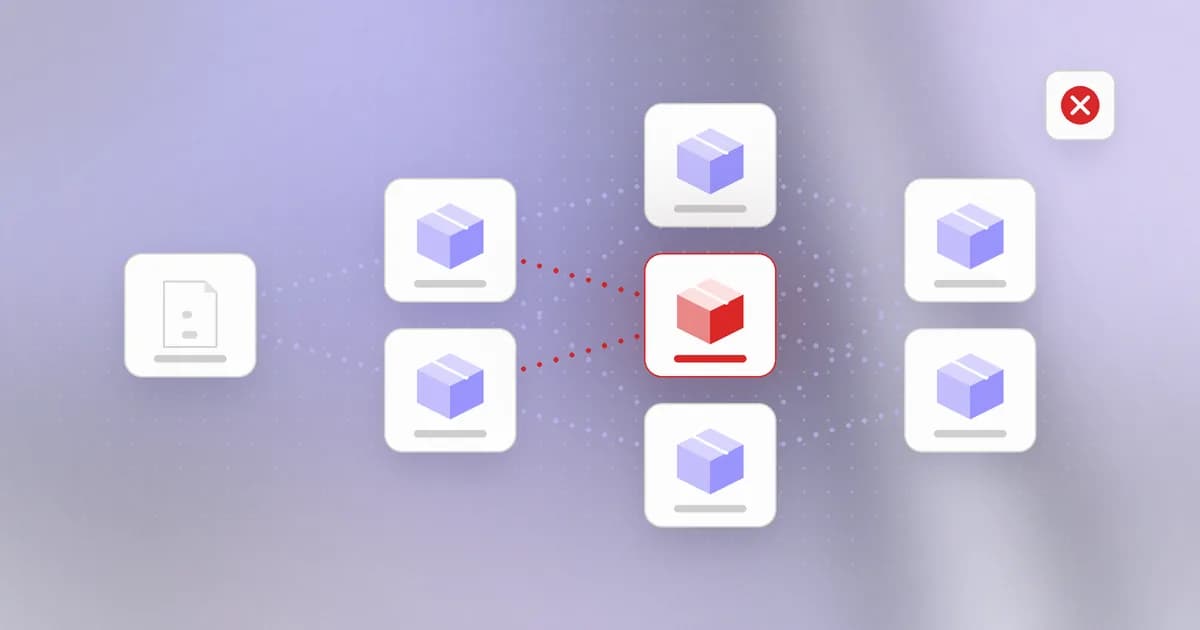
Together AI disclosed on November 21, 2026 that an unauthorized party downloaded stored prompt samples from its serverless inference service after an AI coding agent committed a Hugging Face repository credential to the public xorl GitHub project. CEO Vipul Ved Prakash’s security notice states the samples covered MiniMax M3, GLM-5.2, and Kimi K2.6 traffic on June 24 and July 4, 8, and 14, 2026, collected for authorized software testing and held in a private Hugging Face repository. Automated scanning reverted the leaking commit, but during the exposure window someone with the credential pulled the samples, mined them for secrets, and validated five Dragos canary credentials from a separate supply-chain study.
If you route Claude Code, Codex, Cursor, or a self-hosted harness through Together AI, OpenRouter, or Hugging Face Inference Providers, this is not an abstract “cloud is risky” headline. It is a documented chain: agent writes secret → public repo → stolen prompts → credential replay. The fix is rotation, retention settings, and treating agent-driven git as production CI.
explainx.ai tracked the OpenRouter and MiniMax prompt-read warnings earlier in November (separate news site, not Beam). This post follows Together’s own disclosure and ties it to measured router leaks in Dragos’s canary study.
TL;DR
| Question | Answer (as of November 22, 2026) |
|---|---|
| Am I affected? | Possibly, if you sent serverless requests to MiniMax M3, GLM-5.2, or Kimi K2.6 on Together AI on the listed June–July 2026 days—Together is still reviewing prompt contents |
| Is there a fix? | No recall for downloaded data—rotate keys, enable ZDR, watch for direct customer notice, and stop putting live secrets in prompts |
| Does data leave my machine? | Yes when agents call cloud inference; this incident adds internal agent git leakage and stored test samples as exposure paths |
| Was it exploited further? | Together believes the thief has not re-leaked the set and understands it was deleted—that is investigation status, not cryptographic proof |
| Coding-agent takeaway? | Never let an agent commit long-lived HF or cloud keys to public repos; pair vendor ZDR with router canary hygiene |
What Together AI says happened, step by step
Together’s disclosure is short on exact timelines for the xorl commit, but the mechanism is explicit:
-
Authorized testing collection. For routine software testing, Together stored prompt samples from live serverless traffic in a private Hugging Face repository. Customers whose traffic was sampled on the named models and dates are in scope for review—not necessarily every Together user.
-
Public repo development with an agent. Engineers worked on xorl, a public GitHub project under Together’s org. An AI coding agent committed a credential that granted access to the private Hugging Face repo.
-
Detection and revert—not instant containment. Together says automated scanning spotted the exposed credential and the commit was reverted. Revert does not rotate a secret that already sat in git history or was scraped from the window before revert.
-
Adversary download. During the exposure window, an unauthorized party obtained the credential, downloaded the prompt samples, and searched them for credentials to other services, testing whether those credentials were live.
-
Dragos canaries in the sample set. Five tested credentials were Dragos canary credentials from Dragos’s AI supply chain security experiment—the same research program HD Moore documented on November 19, 2026. Together does not name the adversary or tie them to a specific numbered “provider breach” in the Dragos report, but the canary hit confirms prompt contents were actively mined for secrets.
-
Ongoing forensics. Together engaged an external forensic firm and law enforcement, says it has not identified additional prompt leakage beyond this incident, and is still reviewing whether PII or other customer data appeared in the samples. Affected customers are promised direct contact when review completes.
Together states it has no reason to believe the party re-leaked the data and understands the downloaded set has been deleted. Treat that as vendor investigation status: once prompts leave the boundary, you cannot verify deletion from the outside.
Why this matters for inference supply chains
Three details should change how coding-agent teams evaluate neocloud and router paths:
Stored samples are not the same as ZDR marketing. Together recommends zero data retention (ZDR) for sensitive prompts and made ZDR the default for new accounts after the incident. ZDR addresses contractual retention on the inference path; it does not retroactively protect internal QA repositories or compromised hosts that already copied traffic. The Dragos study found similar gaps—ZDR-marked traffic stolen from compromised providers and scrapers ignoring ZDR flags.
Agents are now part of the SDLC attack surface. The leak vector here is not “customer pasted key into chat.” It is vendor engineers using coding agents on a public repo, mirroring how many teams use Claude Code, Codex, or Cursor on real repositories. One bad git push bridged private HF storage and the internet. That is the same class of failure as environment-variable breaches on hosting platforms, except the committer was an autonomous agent workflow.
Open-model routing concentrates risk. MiniMax, GLM, and Kimi endpoints are exactly the models multi-hop brokers advertise on Hugging Face Inference Providers. You may never have typed “Together AI” in your IDE while still sending similar traffic classes through OpenRouter or HF routers—worth aligning with OpenRouter breach verification guidance and AI API key theft patterns.
What Together AI changed after the incident
Per the same disclosure, Together lists four control shifts:
-
Scoped or short-lived credentials, and keyless access where supported, to shrink blast radius when secrets leak again.
-
Credential checks on all pull requests—explicitly citing PR review, not only post-commit scanning.
-
ZDR default for new accounts so retention is opt-out rather than opt-in.
-
Updated development processes governing the use of AI coding agents—without publishing the full runbook.
Customers are told to enable ZDR in account settings for sensitive prompts and to email [email protected] with questions.
What this means if you run AI coding agents
Start with inventory, then secrets hygiene, then routing:
Map whether you hit the named window. If agents or CI jobs called Together serverless with MiniMax M3, GLM-5.2, or Kimi K2.6 on June 24 or July 4, 8, or 14, 2026, assume prompts may be in the stolen set until Together tells you otherwise. Log model slug, API hostname, and account id the way the Trump overseas data-center tax post recommends for residency—not only which logo your IDE shows.
Rotate and segment keys. Rotate Together API keys, HF tokens, and any third-party keys you might have embedded in prompts during that period. Use per-environment keys with spend caps so one pasted secret cannot fund LLMjacking-scale abuse.
Stop treating prompts as a secrets vault. The incident plus Dragos canaries show attackers search prompt text for live credentials. Keep .env, kubeconfig, and SSH keys out of agent context; use secret managers and short-lived tokens the agent fetches at runtime—not strings the model can echo into logs or samples.
Harden git the way Together now promises internally. Enable branch protection, required reviews, and secret scanning on every repo where agents commit—including forks of public templates. A revert commit does not delete git history from a determined scraper.
Re-evaluate multi-hop inference for proprietary code. When possible, call one first-party endpoint with a named region and ZDR instead of default lowest-price reseller pools. The MCP security guide applies the same “know every hop” mindset to tool servers, not only models.
What Beam can and cannot do here
Beam is local, on-device observability for coding agents: it records tool calls and flagged events under your workspace policy, runs heuristic scans on skills and MCP configs before execution, and redacts known secret formats before persistence on the collector path documented in what agent monitoring tracks.
For this incident class, Beam can help you see when an agent attempts risky writes (for example destructive shell commands or suspicious curl | bash patterns in skills) and surface credential-like strings in local scan reports. Beam cannot see Together’s Hugging Face bucket, block a git push to xorl, or enforce ZDR on a remote API. Enforce-mode PreToolUse denies on Claude Code and Codex require cached policy and are not a kernel sandbox—they will not catch every secret typed into a commit message.
If your policy is advisory, use Beam logs plus git hooks and CI secret scanners as complementary layers. Learn more about how Beam watches agent actions and local-first storage.
Vendor response vs. open questions
| Topic | Together AI’s statement (Nov 21, 2026) | Still open |
|---|---|---|
| Customer count | Review ongoing; direct notification promised | How many accounts appear in samples |
| PII | Reviewing prompt contents for sensitive personal data | Regulatory reporting if PII confirmed |
| Adversary | Unauthorized party; law enforcement engaged | Attribution, indictment, or IOC publication |
| xorl exposure window | During exposure window credential use | Exact commit timestamps and HF audit logs |
| Further leaks | No evidence of additional leakage | Whether other internal repos shared the same credential pattern |
Frequently asked questions
Did Together AI leak customer prompts in 2026?
Together AI confirms unauthorized download of a subset of June–July 2026 serverless prompts stored for testing—not a claim that every customer prompt in those months leaked. Wait for direct notice if your traffic is in scope.
Which models and dates were in the Together AI prompt samples?
MiniMax M3, GLM-5.2, and Kimi K2.6 on June 24, July 4, July 8, and July 14, 2026, per the official post.
How did the Together AI Hugging Face credential get exposed?
An AI coding agent working on the public xorl GitHub repo committed a credential with access to the private Hugging Face sample store. Scanning reverted the commit after detection; an adversary used the credential in the window before containment.
What is zero data retention (ZDR) on Together AI?
A customer-controlled retention mode Together now defaults on for new accounts. Enable it for sensitive workloads, but remember it does not undo breached test archives or secrets already embedded in prompts.
Were Dragos canary credentials involved in the Together AI leak?
Yes—five Dragos canaries were tested from the stolen samples, linking this disclosure to the Dragos AI supply chain measurement.
Is Together AI safe to use with Claude Code or Codex?
Use it with the same caution as any neocloud: ZDR, key rotation, no secrets in prompts, and no unaudited agent git pushes. The incident originated in Together’s own agent workflow, which is a useful warning for your repos too.
What should I do if I used Together AI serverless APIs in June or July 2026?
Rotate, enable ZDR, monitor email, contact [email protected], and review OpenRouter-style routing risks if you chained brokers.
Does Beam stop coding agents from committing API keys to GitHub?
No. Beam augments workstation visibility and skill/MCP scanning; GitHub controls and vendor PR scanning remain mandatory for secret commits.
Related reading
- Dragos: 2M canary prompts and router leaks (November 2026)
- Hugging Face routes Inference Providers through OpenRouter
- OpenRouter breach claim: verified vs unconfirmed
- OpenAI Hugging Face incident: technical analysis
- AI API keys as supply-chain loot
- What agent monitoring software tracks on your machine
- MCP security practical guide
Primary sources: Together AI — Security event: Prompt leakage for requests in June and July of 2026 (Vipul Ved Prakash, November 21, 2026). Dragos — AI Supply Chain Security: What Canary Tokens Found (HD Moore, November 19, 2026).
Disclosure details, customer notifications, and law-enforcement outcomes may change after November 22, 2026. Treat Together’s deletion and non-re-leak statements as vendor investigation status, not independently verified facts.